Virginia Passes Statewide ADU Law: What You Need To Know Before July 2027
The state’s approach to housing is about to change in a big way, but many homeowners aren’t aware of just how sweeping these changes will be.
Senate Bill 531 passed in April of 2026 and it takes effect July 1, 2027. At that time, every locality in the state will be required to allow accessory dwelling units (ADUs) “by right” on single-family lots, subject to statutory exceptions. It stands to reshape the housing inventory landscape in neighborhoods across Virginia.
Why Is Virginia Doing This?
Like many states, Virginia faces a severe housing shortage. Estimates put the gap at over 100,000 homes. Large apartment projects take years to plan, approve, and build. By letting thousands of homeowners build backyard homes or convert garages and basements, the state hopes to create new housing quickly and flexibly, neighborhood by neighborhood.
A Closer Look at the Northern Virginia Housing Shortage
The housing crunch is especially acute in Northern Virginia’s urban centers:
- Alexandria City has consistently faced a shortage of affordable homes, with city estimates showing a need for several thousand more affordable units over the next decade. The city lost over 17,000 market-affordable units between 2000 and 2020, and its 2030 housing plan calls for adding at least 2,250 affordable units just to keep pace;
- Arlington County reports a shortfall of more than 10,000 homes affordable to low-and moderate-income households, and demand is expected to rise as population grows;
- Fairfax County estimates it will need more than 15,000 new affordable homes by 2034, with the greatest gaps in entry-level and workforce housing.
These shortages drive up rents and push families out, creating pressure for creative solutions beyond traditional large-scale development.
How Current ADU Laws Work, And Their Limits
Arlington County
Arlington allows both attached and detached ADUs in single-family zones, with detached units capped at 750 square feet or 56% of the main home’s footprint, whichever is less. There is no owner-occupancy requirement, but strict size, setback, and parking rules can make construction difficult. Permits must be obtained, and each project is subject to design and zoning review. Short-term rentals like Airbnb are allowed for primary residences, but ADUs may have additional restrictions.
Alexandria City
Alexandria has taken steps to legalize ADUs, but local rules still cap unit size (no more than 800 square feet and two bedrooms), require owner-occupancy, and restrict short-term rentals. Permitting and a public engagement process often add months to the timeline.
Fairfax County
Fairfax allows ADUs (“Accessory Living Units”) but with several hurdles. Only attached ADUs are ‘by right’ in some zones, and they are limited to 800 square feet or 40% of the principal dwelling’s size, whichever is less. Detached ADUs are not generally permitted unless the property is over two acres. There are also parking and entrance requirements, and the permitting process can be complex.
How the New Statewide Law Will Change Things
Starting July 1, 2027, Virginia’s new ADU law will override many of these local restrictions:
- Every single-family lot statewide will be allowed one ADU “by right,” meaning local governments can’t block it, or add extra requirements;
- Permit fees for ADUs are capped at $500;
- Owner-occupancy is required (the owner must live on the property, either in the main house or ADU). Localities may set a minimum 30-day lease, but localities can no longer ban non-family tenants;
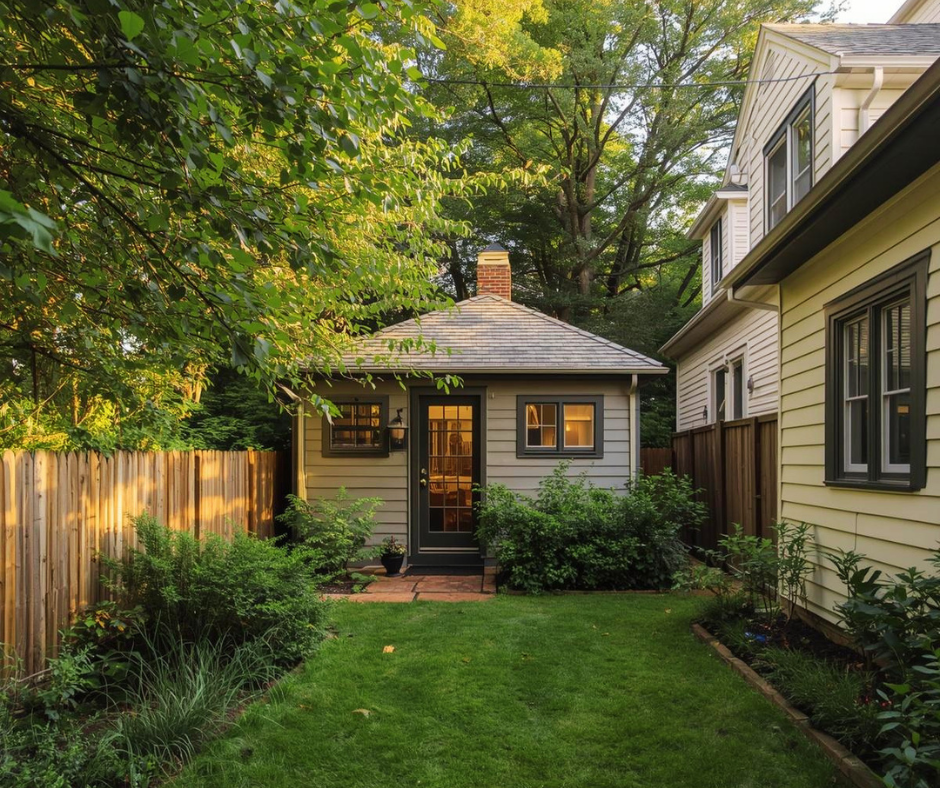
- Size and design restrictions will be standardized, making it easier to build detached units, including backyard cottages and tiny homes.
Compared to today’s patchwork of rules, these changes will streamline the process and expand what’s possible for homeowners and renters across Northern Virginia.
What It Means For Homeowners
For many, this is more than just flexibility, it’s financial leverage. Adding an ADU can mean rental income, increased property value, or space for aging relatives and adult children. Because the old “blood relative only” rule becomes obsolete, homeowners will be able to rent units to anyone seeking alternative housing.
Virginia’s New ADU Law Will Boost Home Values and Resale Appeal
One of the biggest under-the-radar impacts of Virginia’s statewide ADU law will be on home prices and the broader resale market. For years, buyers in places like Alexandria, Arlington, and Fairfax have paid premiums for properties with flexibility; finished basements, in-law suites and large lot sizes for expansion. By making it easier and faster for homeowners to add a legal, income-producing unit, SB 531 will raise the ceiling on what many homes are worth.
Why? Because an ADU isn’t just a converted basement or bonus room, it’s a self-contained home that can generate rental income or offer multigenerational housing flexibility. When buyers know they can legally build or rent a second dwelling, homes become more attractive to a wider pool of people: house hackers seeking cash flow, parents helping adult children, and buyers seeking solutions for aging relatives.
Expect to see properties marketed with phrases like “ADU-ready” or “multigenerational living potential” because it’s a clear selling point in a region where homes with existing or permitted ADUs command a premium. Over time, this shift could strengthen the entire resale market. Instead of limiting the appeal of single-family homes to traditional families, sellers will be able to target a much wider range of buyers. The result: higher demand, increased value, and a more resilient housing market that adapts to the way Virginians actually live today.
A Surge in Demand Means Pre-Planning
As July 2027 approaches, demand for ADU contractors and modular builders is expected to rise dramatically. Waiting until the last minute could mean longer timelines and higher prices, as more homeowners jump in to take advantage of the new rule.
What To Do Now
If you’re thinking about an ADU, start planning ahead:
- Consider your long-term goals: rental income, family or guest use, or added resale value with selling in mind
- Evaluate your property details and check local zoning rules
- Familiarize yourself with permitting rules, and time your early permit application using local sites like Alexandria’s Apex or Arlington’s Accela portals (check for updates incorporating the new law)
- Consult builders and architects familiar with ADUs and review designs
- Explore financing options
- Finalize plans
- Schedule construction work up to 6 months in advance, depending on location.
Virginia’s new law brings new value to both homeowners and renters. By July 2027, adding a backyard home will be a straightforward option for thousands of Virginians.
Sources
Text of Virginia SB 531
Virginia housing shortage data
Disclaimer: The information provided on this site is for general informational and educational purposes only and does not constitute professional real estate, legal, or financial advice. While we strive to keep information accurate and up-to-date, topic details, property details, market conditions, prices, and availability are deemed reliable but not guaranteed. Readers should conduct their own independent due diligence and consult with a licensed real estate broker, attorney, CPA, financial advisor or appropriate District of Columbia government agency to verify information and policy. Content subject to change without notice. realestateinthedistrict.com and dcrealestate.channel, their owners, operators and writers disclaim any liability for any loss or damage-arising directly or indirectly from the use of or reliance on any information provided on this blog. This blog and its affiliated social media channels are the sole property and responsibility of their owner, and are not affiliated with Compass International Holdings (CIH).