We Made Housing A Commodity. What now?
From Shelter To Asset And Commodity
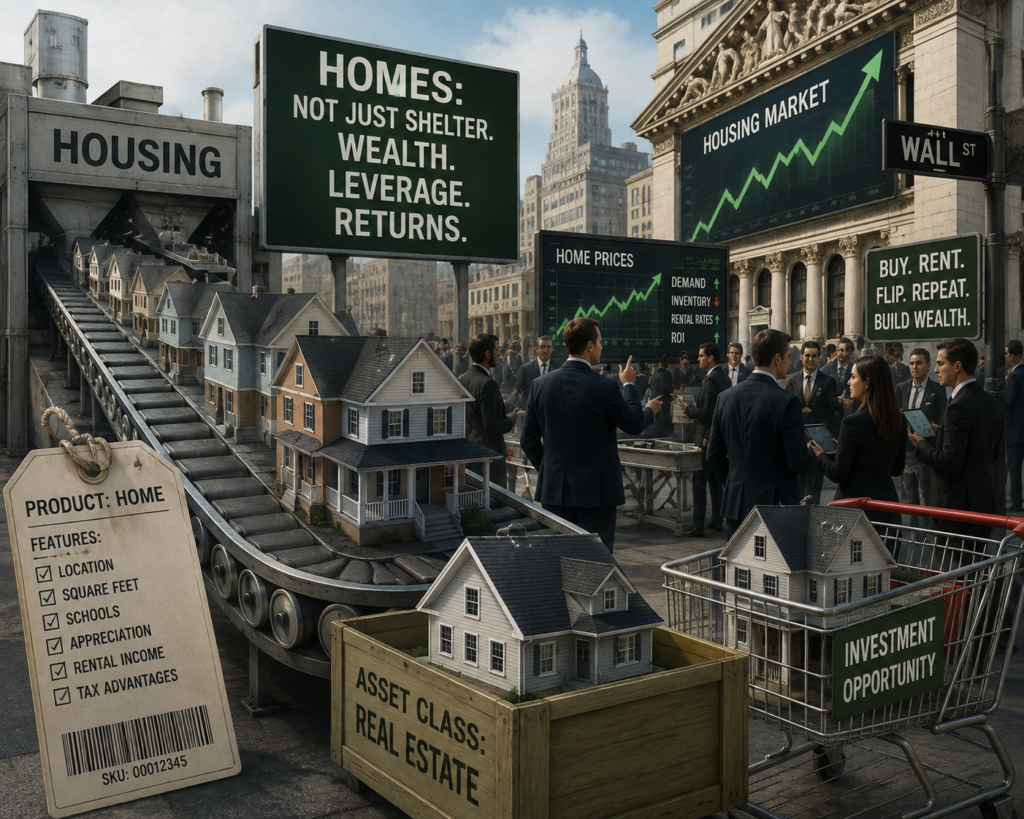
Housing transitioned from being viewed as shelter to an asset, then a commodity as a result of broadened financialization of the housing market. Homes were increasingly seen as investment vehicles for wealth generation, leading to speculation and treating housing prices as subject to market forces like other commodities, rather than based on the need for shelter.
This shift was primarily driven by readily available mortgage financing, the perception of consistent property value appreciation over time, and institutional investors flooding the single-family home rental market following the Great Recession, acquiring assets as skyrocketing foreclosure rates provided a glut of homes at heavily discounted prices.
Declining interest rates lured the general public back into the market, and persistent low rates fed another bubble.Housing again shifted from shelter and asset to commodity.
What Is Housing Commodification?
The commodification of housing is the process of treating housing as a product to be exploited for profit, rather than a basic human right. It’s driven by financialization, or the increasing influence of financial institutions in the public sphere.
Speculative investment, demolition of affordable housing, ‘renovictions’, and small condos are all forms of housing commodification.
How Housing Became A Commodity
Nearly all of the planet’s 15.77 billion acres of habitable land is considered “owned” by various countries and entities, and as the saying goes, ‘they’re not making any more’. Land, water and air are the Earth’s most precious resources, and bit by bit, countries around the world have been financializing them. That effort made a big leap in the United States during the early 2000’s, and spread around the world.
The expansion in the housing sector paired with an expansion in home mortgage lending in the early 2000’s.
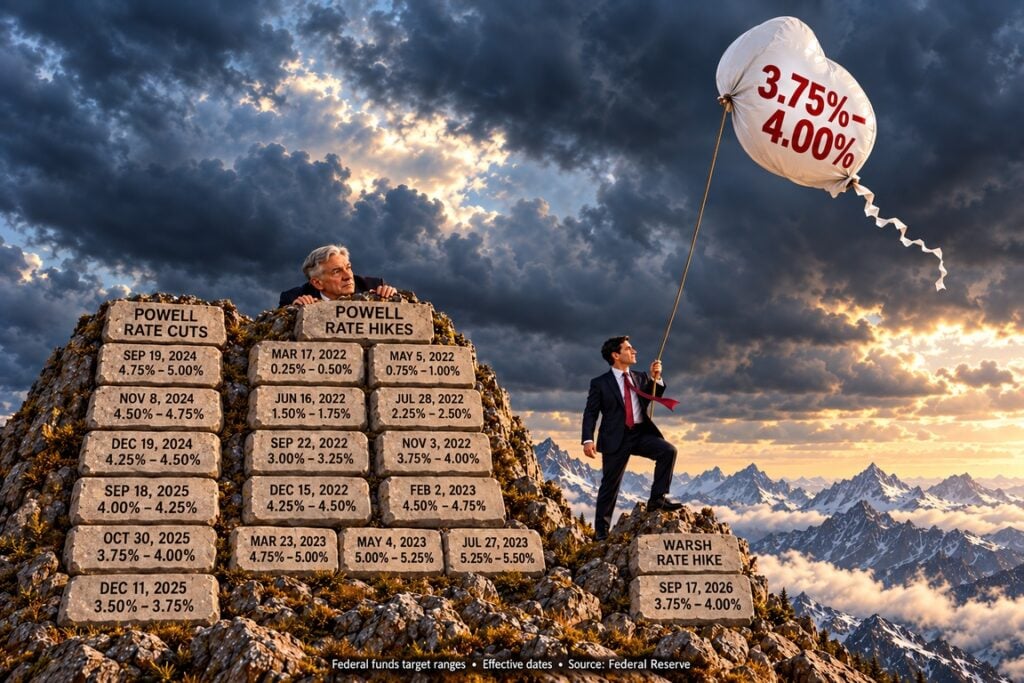
After the dot com bubble burst in 2001, the FOMC (Federal Open Market Committee) held an emergency meeting in September 2001, and dropped the federal funds rate 50 points to 3% to stimulate the economy, then made additional cuts of 50 basis points each in October and November, finally ending the year with a quarter-point cut in December, bringing the rate to 1.75%. Two additional cuts followed in 2002 and 2003, totaling 75 basis points, to a rate of 1%.
The stock market dropped by 12.57% in the first year after the Fed cut rates and continued to fall over the next three years, making real estate an extremely attractive investment since home values were rising rapidly.
Loose credit standards and cheap borrowing costs ballooned the mortgage debt of US households, which rose from 61% of GDP in 1998 to 97% in 2006. The growth of the market for mortgage-backed securities contributed to this borrowing increase. Subprime (high-risk) mortgages were offered by lenders who repackaged the loans into securities. Home-buying fever gripped Americans, creating demand that bid up home prices nationwide.
U.S. Homeownership Rates
Everybody wanted to get in on the action. Rampant investor speculation took over the market, bidding wars pressured homebuyers to act hastily and assume unreasonable risk. House flipping became a common side-hustle. So-called ‘renovictions’ popularized as property owners sought to profit from sales of rental housing.
U.S. Home Prices
S&P Dow Jones Indices LLC, S&P CoreLogic Case-Shiller U.S. National Home Price Index , retrieved from FRED, Federal Reserve Bank of St. Louis; https://fred.stlouisfed.org/series/CSUSHPINSA, December 14, 2024.
U.S. Median Sold Price
The U.S. median sold price for residential property more than doubled during the seven year period from Q1 2001 (MSP $169,800.) to Q1 of 2007 (MSP $357,400).
The spike in housing prices created a crisis of unaffordability, displacement, and homelessness.
Predictably, what went up during the subprime housing boom came crashing down when the bubble burst in 2008.
Initially, the housing crisis seemed to be concentrated in certain states and in the subprime mortgage market, but eventually spread to the entire U.S. housing market. Home prices declined nationwide. The financial system that created the housing boom was highly exposed to its own monster’s crash, which threatened to take the financial system down with it unless the government stepped in.
Tthe 2007 housing market collapse was the most severe U.S. financial crisis since the Great Depression. It caused The Great Recession, a lengthy economic contraction that affected the global economy. An estimated 8 million Americans were displaced due to escalating unemployment that resulted in mass foreclosures. In 2008 alone, 3.1 million Americans filed for foreclosure, which at the time was one in every 54 homes (CNN Money). Home prices fell by 18.2% in November of 2008 compared to November of 2007 in 20 major metropolitan areas. It was the largest annual decline in the history of the S&P/Case-Shiller Home Price Indices, which dates back to 1987.
Is Housing A Right?
The right to adequate housing is a human right recognized in international human rights law as part of the right to an adequate standard of living. But from there, it gets tricky.
Housing for all advocates interpret the U,S. Constitution as recognizing housing as a right in President Franklin D. Roosevelt’s U.S. Housing Act of 1949, which pledged, “the realization as soon as feasible the goal of a decent home and a suitable living environment for every American family.”
Critics counter that a goal is not a right, that the Constitution protects only the right to private property, not the right to housing. The U.S. Constitution protects property rights through the Fifth and Fourteenth Amendments Due Process Clauses and the Fifth Amendment’s Takings Clause. Critics assert that establishing a right to housing would involve regulations of property that constitute unlawful takings in violation of the Constitutional rights to property.
These critics also argue that U.S. housing markets are too complex for implementation of a right to housing, citing (ironically) cost and uncertainty of the benefits (to those already benefitting, one assumes). State and local governments should address issues of homelessness, housing, and development, they believe.
How’s that approach been going?
Consequences Of Commodification of Housing
The subsequential effects of housing financialization are:
- Displacement of residents due to rising rents
- Inflated housing prices
- Widening wealth gap
- Concentration of housing ownership by institutional investors
- Housing insecurity, particularly for people of color and people with low incomes
- Homelessness
- Housing market instability
- Reduced housing affordability
- Increased risk of foreclosure
- Governments are held accountable to investors rather than uphold international standards for housing as a human right.
Is There A Plan?
There is no viable plan that I could find proposing a practical solution to this issue. This article in the Harvard Business Review suggests that the market itself needs to be fixed.
“Any plan to overhaul the housing market needs to, first, confront the power of landlords to raise rents. Second, it requires rethinking public governance of housing markets behind simplistic prescriptions to just free the housing market from government regulation, assuming lower rents will follow. And third, it needs to provide more muscular government involvement in housing, through price regulation, more robust planning, and even direct public provision.”