Home prices post smallest increase in nearly two years, Case-Shiller index says. A break for buyers after decades of price increases? That depends…
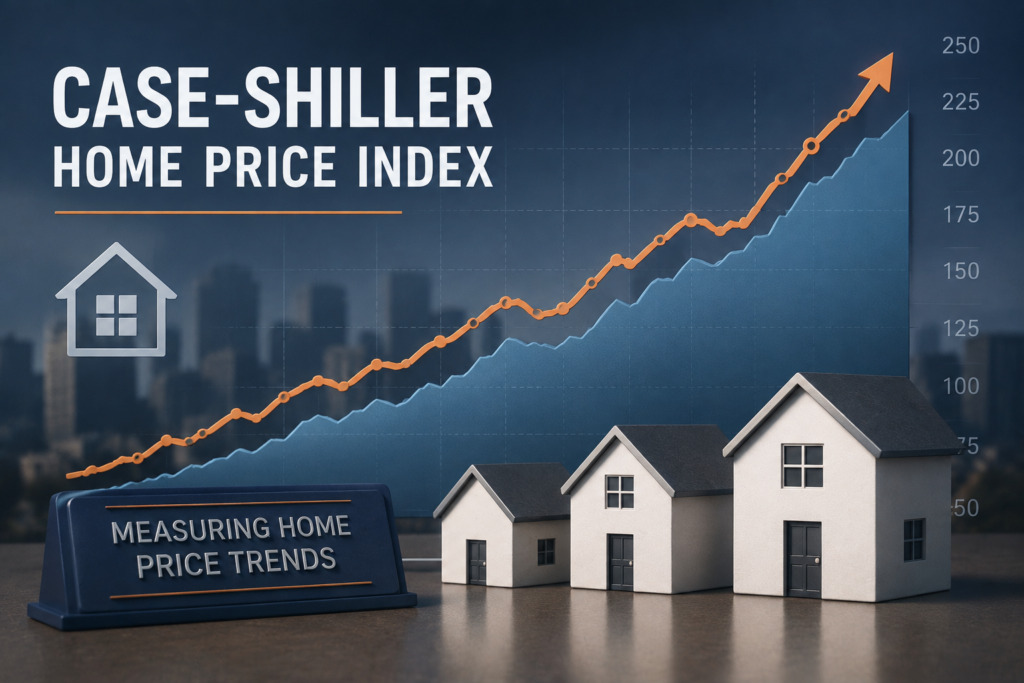
The Latest Case-Shiller Home Price Index Report: Price Growth Pace Slows But Prices Are Still Rising
If you’ve spent the past few years watching home prices climb and mortgage rates soar, you’re probably wondering if now is finally the moment buyers get a break. News reports tout a slowdown in national home price increases based on the July 29th S&P CoreLogic Case-Shiller U.S. National Home Price NSA Index. It suggests a potential change in pricing trajectory, but the story is more nuanced than the headlines.
The Index shows that record-breaking U.S. home prices are still rising, but the pace of growth is slowing. Annual home-price growth increased in May by 2.3%, down from April’s 2.7%.
Case-Shiller’s 10-city index was up 3.4% for 2025, and the 20-city index rose 2.8% from a year ago. After seasonal adjustment, national, 10-city and 20-city price growth decreased slightly.
Home Prices Are Still Increasing Nationally, But At A Slower Pace
After more than a decade of wild ups and downs (but mostly ups), home prices in the 20 largest U.S. metros are finally tapping the brakes. The S&P CoreLogic Case-Shiller index, which tracks prices in those big cities, slipped 0.3% in May compared to April — a small dip, but notable after years of relentless, and at times double-digit, growth.
Zoom out, though, and prices are still up 2.8% over the past year through September. That’s a big slowdown from the nearly 8% annual gains we saw just last year, and a far cry from the jaw-dropping 20% spikes during the pandemic. If you remember 2015 or 2016, when annual appreciation hovered around 5-6%, today’s pace feels almost normal by comparison.
Nationally, prices have also eased, with a 0.3% drop in May but a 2.3% gain year-over-year. In raw numbers, the median existing home sold for $423,700 in May, pretty much flat compared to new construction at $422,700.
What That Means For Buyers
This means the days of out-of-control bidding wars and huge monthly price leaps are fading, replaced by a market that’s more predictable and, in some cities, even softening somewhat. But that doesn’t make up for a decade+ of price increases and mortgage interest rate hikes of the past two years.
Mortgage Rates: The Meaningful Pricing Offset That’s Probably Not Coming
If home prices are plateauing, mortgage rates are the new mountain to climb. Ten years ago, the average 30-year fixed rate sat around 4%. As recently as 2021, home buyers could lock in rates under 3%. Fast forward to this summer, and rates have hovered near 7%. The highest in over two decades.
This dramatic rise means that even as price growth slows, monthly payments still feel punishing. For many would-be buyers, it’s the combo of home price plus cost to borrow that’s acting as a deterrent to entering the market. It’s also keeping sellers locked into homes carrying mortgage rates below 5%.
The Case-Shiller Index has risen more than 55% since January of 2020, a massive jump. Unless mortgage interest rates recede to 6% or lower, affordability will remain a challenge.
Will that happen in September? Fed Chair Jerome Powell has made it clear that the Fed will maintain a cautious approach. Any cuts to the benchmark federal rate must be justified by economic conditions. Some Fed officials have expressed concerns about a slowing economy and the potential for rising unemployment, which could support earlier rate cuts.
As of this posting, CME FedWatch tool shows a 63.7% chance of a 25 basis point cut at September’s FOMC meeting. Following the Fed’s October meeting, it shows a 50.5% chance that interest rates will be cut 25 basis points and a 29.7% chance they’ll cut 50 basis points.
Even if cuts come, they are most likely to be in small increments (25 basis points each) and only two or three can be expected for the remainder of the year. Remember, also, that even if the Fed drops the central bank’s rate in September, mortgage interest rates won’t necessarily follow in lockstep. Look to last September for proof of that.
Regional Winners and Losers
Real estate is local. Not every city is reacting to economic and housing conditions in the same way. New York led the pack with a 7.4% annual price jump in May, while Tampa saw prices dip by 2.4%. Several markets; including Dallas, San Francisco, and Denver; are flat or slightly down, hinting at more negotiating power for buyers. Meanwhile, cities like Chicago (+6%), Cleveland (+4.8%), and Detroit (+4.9%) are still seeing above-average gains, but none match the fever pitch of just a few years ago.
In the DC Metro Area, the home price index has reflected the broader national pattern of slowing growth, but with its own twists. Over the past year, prices in Washington have risen by about 3.3% (3.1% in May 2025), per the S&P CoreLogic Case-Shiller 20-city house price index, a moderate increase compared to some of the pandemic-era surges but still enough to keep affordability tight for many buyers. While our region is shaped by a large government workforce and steady demand, which historically has made it less volatile than coastal hotspots, home owners and buyers are feeling the effects of job and economic uncertainty due to the current administration’s policies. Inventory has increased to a 10 year high, giving buyers more options and greater bargaining power than they’ve had in recent years, but it can feel like a buyer’s market in name only. Median home prices are still increasing for many home types and locations. Combined with interest rates in the mid-6% to 7% range, navigating the DC housing market requires careful budgeting, a willingness to move quickly when the right opportunity comes along, and savvy negotiation.
Inventory and Negotiation
Inventory is finally rising. In June, the number of homes for sale was up nearly 30% compared to the previous year. That’s led to more price cuts. About 1 in 5 MLS listings saw a reduction, the highest share for June since at least 2016. If you’re shopping now, you’re less likely to face a bidding war and more likely to find sellers willing to negotiate… at least on terms, if not price.
Today’s Market And Home Buyers
A decade ago, the sting of the last housing crash still lingered, and mortgage rates hovered at historic lows. Since then, the market has lurched from steady recovery to a pandemic-fueled frenzy, and now to an uneasy plateau. What’s clear now is that the frenzied, seller-dominated market of the past few years is being dragged down by market uncertainty caused by a volatile economy, political upheaval, rising inflation and elevated mortgage rates. Far from ‘balanced,’ the current market could better be described as ‘cowed.’
If you’re hoping for a true “buyer’s market,” keep an eye on mortgage interest rates. If rates stay high and economic conditions remain unfavorable, home prices are likely to continue to soften, but mortgage rates may remain at or near current levels. Conversely, a rate drop to, or below, 6% would bring draw more buyers into the market, but spark greater competition, which leads to price increases. It’s a ‘pick your poison’ situation.
For home buyers who want to risk ‘alternative’ mortgage options, or those who can pay cash, the market may feel friendlier, with more choices and greater flexibility in price and terms negotiation. But buyers looking at a first home financed with a conventional loan might be inclined to stay on the sidelines, hoping for better conditions in 2026.
In all, sluggish home sales activity is likely to continue through the second half of 2025, with sales ending at or below the historically low totals of 2024.
Disclaimer: This post is offered for informational purposes only and should not be construed as financial or legal advice, design or construction advice. Home buyers and sellers must always perform their won due diligence and seek counsel from licensed professionals such as CPAs and attorneys when making choices relating to a real estate transaction. We do not endorse individual service providers and citations should not be considered endorsements.