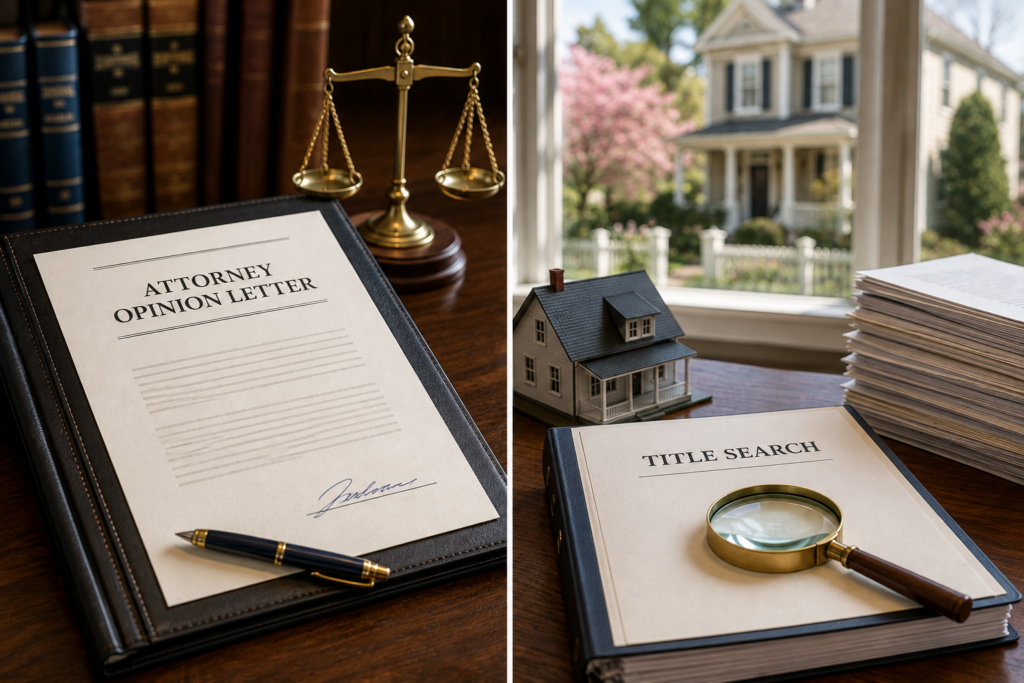
What Is An Attorney Opinion Letter?
An AOL is a document prepared by a real estate attorney that provides a professional assessment of a property’s title. While it can confirm ownership and identify potential issues, it does not provide financial protection against unknown title defects, fraud, or recording errors. In contrast, title insurance is a policy that protects homebuyers and lenders from unforeseen title issues, covering legal fees and potential financial losses.
What Are The Benefits Of Attorney Opinion Letters?
Potential cost saving is the primary benefit. Attorney opinion letters are generally less expensive than title insurance. While not a substitute, in low-risk situations, AOLs may be a viable alternative.
AOLs provided by an experienced, skilled practitioner may also offer an in-depth analysis of a property’s title status with a written opinion on potential issues or defects.
Loss ratio is used in the insurance industry to represent the ratio of losses to premiums earned by insurance companies. It is calculated by dividing the total amount paid in claims plus adjustment expenses by total earned premiums. The title insurance loss ratio for the third quarter of 2024 was up 6.1% in loss and loss adjustment expenses. The industry’s loss ratio is typically between 3% and 7%. Its combined ratio, which includes both expenses and losses, is usually between 95% and 102%.
Darrow Everett states: “Because the title insurance industry’s loss ratio is generally low compared to other insurance companies, some buyers may choose to roll the dice on forgoing a title insurance policy.”
Losses can be high if an issue arises after closing, however.
Do Attorney Opinion Letters Replace Title Insurance?
Using an attorney opinion letter instead of a title search requires reliance on a lawyer’s professional opinion about the status of a property’s title, rather than conducting a comprehensive search of public records to identify potential issues, which is what a traditional title search does. AOLs may not uncover hidden defects or fraudulent claims not readily apparent in public records, leaving the buyer and lender more vulnerable to title issues, and uninsured against them.
Key points to consider before opting for an AOL instead of a title search:
- Limited coverage: Unlike a title insurance policy, an attorney opinion letter only covers what the lawyer can find in the public records and does not protect against issues like fraud, forgery, or missing heirs that might not be readily apparent.
- Increased risk for buyer and lender: If a title issue arises, the buyer and lender would need to prove negligence on the part of the attorney to make a claim against them, which can be difficult.
- Not suitable for complex transactions: For properties with a complicated title history or potential legal issues, a full title search with title insurance is generally recommended.
- Jurisdictional regulations: Local laws may restrict use of AOLs in your area.
- Attorney expertise and experience: Research is required to identify a lawyer with substantial experience in real estate law to ensure a thorough analysis of the title.
- Lender approval: Lenders must be willing to accept an attorney opinion letter. Restrictions and conditions may apply.
Consumers may feel that a title insurance policy was a waste of money if the title search returns no issues, but it’s important to remember that title insurance covers the insured against future issues and those in the past that may arise from undiscovered defects or legal challenges. The insured homeowner is protected against financial losses arising from defects in the property’s title, such as liens, forged documents, or missing heirs, that existed before the purchase date and were not discovered during the title search, and covers these potential issues for as long as the insured owns the property.
Do GSEs Freddie Mac And Fannie Mae Accept AOLs?
Government Sponsored Enterprises Freddie Mac have accepted AOLs in lieu of title insurance policies for certain mortgage transactions since at least 2008. In May 2020, Freddie Mac issued guidance detailing the acceptance of AOLs under specific conditions. In April 2022, Fannie Mae aligned its policy with Freddie Mac, allowing the use of AOLs in limited circumstances. In 2024, Freddie Mac expanded the eligibility for AOLs to include mortgages secured by units in condominium projects and properties subject to restrictive agreements or covenants.
Do Real Estate Agents Recommend Attorney Opinion Letters?
AOLs Expose Buyers to Significant Financial Risk
According to ALTA, one sizable risk in replacing title insurance with an AOL is related to items not discoverable in a public records search like federal tax liens, mis-indexed items or HOA liens. Uunlike title insurance, an AOL does not protect against:
- Unknown title defects (e.g., undiscovered liens, missing heirs, property boundary disputes)
- Fraud or forgery (e.g., fraudulent deeds, falsified ownership records)
- Clerical errors in public records
- Legal costs associated with defending ownership rights
Another important example of the difference in coverage is fraud or forgery of title documents. Title insurance provides coverage when a seller’s deed was forged or there was fraud with the previous owner’s will. An attorney opinion letter does not typically proide this assurance.
American Land Title Association (ALTA) also reports that one out of every three properties have title defects ranging from incorrect legal descriptions, to unpaid liens that were never released, to ownership interest of previous owners that have not been properly extinguished.
Unreleased deeds of trust (aka; unreleased mortgages) are a common title defect that occurs when a past loan was paid off but the lien was never properly removed from the public record (“released”). Even if the loan was satisfied, a missing or improperly recorded release can cloud the title, potentially preventing a clear transfer of ownership.
While an AOL may identify an unreleased deed of trust in public records, it doesn’t provide financial protection if the issue later leads to legal disputes or requires costly resolution. Only a title insurance policy covers financial losses and legal expenses related to unresolved liens, fraud, or recording errors.
ALTA points out that title insurance provides lenders with a defense—including all attorneys’ fees and costs—in a lien priority dispute or other matter covered by the policy, while AOLs do mot.
If a title issue emerges after closing, the buyer bears full financial responsibility for resolving it with an AOL, whereas title insurance would cover these risks.
Legal and Ethical Boundaries
Real estate agents are not attorneys and cannot provide legal advice on whether an AOL is a sufficient alternative to title insurance. If an agent promotes AOLs and a buyer later faces a title dispute, the agent could be blamed or even face legal consequences.
Lenders Typically Require Title Insurance
Most mortgage lenders require title insurance to protect their financial interest in the property.
While Fannie Mae and Freddie Mac have moved to allow AOLs in certain situations, most lenders still prefer title insurance as the standard protection. If a buyer is financing their home purchase, they may not even have the option to use an AOL.
Title Insurance Provides Greater Security for All Parties
Title insurance has been the industry standard for over a century because it offers the most comprehensive protection against unforeseen title issues. If an issue arises, title insurance covers legal fees and financial loss, whereas an AOL does not.
Promotion Of High-Risk Alternatives Isn’t In The Client’s Best Interest
Real estate agents prioritize client protection, smooth transactions, and lender compliance. Because AOLs carry higher risks, limited lender acceptance, and no financial protection for buyers, most agents are unlikely to promote risky alternatives to title insurance, which offers proven security and industry-wide acceptance.
For buyers looking to reduce closing costs, the best strategy in most instances is to shop around for competitive title insurance rates rather than relying on a high-risk alternative like an AOL.
As always, due diligence is up to the client. Agents can offer their imsights, but decisions on products and services are the responsibility of the buyer and seller.
Disclaimer: This post is offered for informational purposes only and should not be construed as financial or legal advice. Home buyers and sellers must always perform their won due diligence and seek counsel from licensed professionals such as CPAs and attorneys when making choices relating to a real estate transaction. We do not endorse individual service providers and citations should not be considered endorsements. Statements, projections and quotations are sourced from reliable news and research providers and are believed to be accurate, but not guaranteed. Posts on this site are solely the work of the author and not Compass or any team affiliated with the author or Compass.