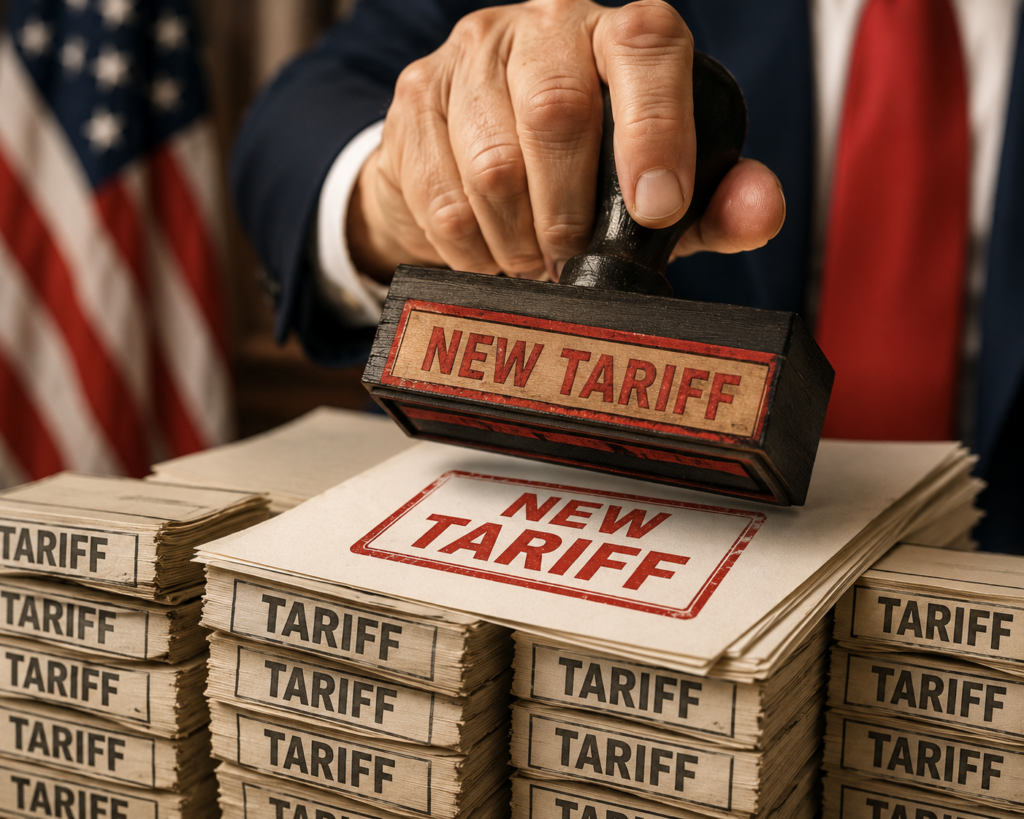
February Came In With New Tariffs. And Then…
Optimism for the U.S. housing market fell like a load of bricks on in the first week of February when President Trump hit Canada, China, and Mexico with tariffs. After discussions between the parties, a 30 day stay was placed on the tariffs on Canada and Mexico. The Tariff on China remained.
I predicted tariffs, along with retaliatory responses from the affected countries, could have far-reaching consequences for homebuyers, builders, and the broader economy. There was some skepticism, with many saying Trump was just posturing and that he wouldn’t follow through, or the tariff tussle would be quick.
Canada almost immediately announced retaliatory measures:
- 25% tariffs on C$155 billion of US goods
- C$30 billion will take effect on Tuesday
- Duties on the remaining C$125 billion in 21 days
- PM vows to work with provinces on non-tariff measures
Additional retaliatory measures were expected from China and Mexico.
The following Monday, February 10th, Trump announced new tariffs of 25% on all three countries for imports of aluminum and steel, and promised additional tariff announcements later in the week.
The seesawing announcements and retractions began.
Then, the announcement of April 2nd as “Liberation Day” came. In an executive order, Trump said while U.S. trading policy has been built on the principle of reciprocity, taxes and barriers on American products by its trading partners had hurt the U.S.
The tariffs were his response. These reciprocal tariffs will take effect on April 9th. Russia and China were left untouched.
So where are we now, on April 3rd?
April 2025 Tariffs
| Country | Trump Tariff % | US deficit ÷ US imports |
|---|---|---|
| Afghanistan | 10 | 49 |
| Albania | 10 | 10 |
| Algeria | 30 | 59 |
| Andorra | 10 | 10 |
| Angola | 63 | 32 |
| Anguilla | 10 | 10 |
| Antigua and Barbuda | 10 | 10 |
| Argentina | 10 | 10 |
| Armenia | 10 | 10 |
| Aruba | 10 | 10 |
| Australia | 10 | 10 |
| Austria | 20 | 39 |
| Azerbaijan | 10 | 10 |
| Bahamas | 10 | 10 |
| Bahrain | 10 | 10 |
| Bangladesh | 37 | 74 |
| Barbados | 10 | 10 |
| Belarus | 10 | 10 |
| Belgium | 20 | 39 |
| Belize | 10 | 10 |
| Benin | 10 | 10 |
| Bermuda | 10 | 10 |
| Bhutan | 10 | 10 |
| Bolivia | 10 | 20 |
| Bosnia and Herzegovina | 35 | 70 |
| Botswana | 37 | 74 |
| Brazil | 10 | 10 |
| British Indian Ocean Territory | 10 | 10 |
| British Virgin Islands | 10 | 10 |
| Brunei | 24 | 47 |
| Bulgaria | 20 | 39 |
| Burkina Faso | 10 | 10 |
| Burundi | 10 | 10 |
| Cabo Verde | 10 | 10 |
| Cambodia | 49 | 97 |
| Cameroon | 11 | 22 |
| Canada | 20 | 39 |
| Cayman Islands | 10 | 10 |
| Central African Republic | 10 | 10 |
| Chad | 13 | 26 |
| Chile | 10 | 10 |
| China | 34 | 67 |
| Christmas Island | 10 | 10 |
| Colombia | 10 | 10 |
| Comoros | 10 | 10 |
| Congo | 10 | 10 |
| Costa Rica | 10 | 17 |
| Cote d’Ivoire | 21 | 41 |
| Croatia | 20 | 39 |
| Cuba | 10 | 10 |
| Curaçao | 10 | 10 |
| Cyprus | 20 | 39 |
| Czech Republic | 20 | 39 |
| Denmark | 20 | 39 |
| Djibouti | 10 | 10 |
| Dominica | 10 | 10 |
| Dominican Republic | 10 | 10 |
| Ecuador | 10 | 12 |
| Egypt | 10 | 10 |
| El Salvador | 10 | 10 |
| Equatorial Guinea | 13 | 25 |
| Eritrea | 10 | 10 |
| Estonia | 20 | 39 |
| Eswatini | 10 | 10 |
| Ethiopia | 10 | 10 |
| Falkland Islands | 41 | 82 |
| Fiji | 32 | 63 |
| Finland | 20 | 39 |
| France | 20 | 39 |
| French Guiana | 10 | 10 |
| French Polynesia | 10 | 10 |
| Gabon | 10 | 10 |
| Gambia | 10 | 10 |
| Georgia | 10 | 10 |
| Germany | 20 | 39 |
| Ghana | 10 | 17 |
| Gibraltar | 10 | 10 |
| Greece | 20 | 39 |
| Greenland | 10 | 10 |
| Grenada | 10 | 10 |
| Guadeloupe | 10 | 10 |
| Guam | 10 | 10 |
| Guatemala | 10 | 10 |
| Guernsey | 10 | 10 |
| Guinea | 10 | 10 |
| Guinea-Bissau | 10 | 10 |
| Guyana | 38 | 76 |
| Haiti | 10 | 10 |
| Heard Island and McDonald Islands | 10 | 10 |
| Honduras | 10 | 10 |
| Hungary | 20 | 39 |
| Iceland | 10 | 10 |
| India | 26 | 52 |
| Indonesia | 32 | 64 |
| Iran | 10 | 10 |
| Iraq | 39 | 78 |
| Ireland | 20 | 39 |
| Israel | 17 | 33 |
| Italy | 20 | 39 |
| Jamaica | 10 | 10 |
| Japan | 24 | 46 |
| Jordan | 20 | 40 |
| Kazakhstan | 27 | 54 |
| Kenya | 10 | 10 |
| Kiribati | 10 | 10 |
| Kosovo | 10 | 10 |
| Kuwait | 10 | 10 |
| Kyrgyzstan | 10 | 10 |
| Laos | 48 | 95 |
| Latvia | 20 | 39 |
| Lebanon | 10 | 10 |
| Lesotho | 50 | 99 |
| Liberia | 10 | 10 |
| Libya | 31 | 61 |
| Liechtenstein | 37 | 73 |
| Lithuania | 20 | 39 |
| Luxembourg | 20 | 39 |
| Madagascar | 47 | 93 |
| Malawi | 17 | 34 |
| Malaysia | 24 | 47 |
| Maldives | 10 | 10 |
| Mali | 10 | 10 |
| Malta | 20 | 39 |
| Marshall Islands | 10 | 10 |
| Martinique | 10 | 10 |
| Mauritania | 10 | 10 |
| Mauritius | 40 | 80 |
| Mayotte | 10 | 10 |
| Mexico | 20 | 39 |
| Micronesia | 10 | 10 |
| Moldova | 31 | 61 |
| Monaco | 10 | 10 |
| Mongolia | 10 | 10 |
| Montenegro | 10 | 10 |
| Montserrat | 10 | 10 |
| Morocco | 10 | 10 |
| Mozambique | 16 | 31 |
| Myanmar | 44 | 88 |
| Namibia | 21 | 42 |
| Nauru | 30 | 59 |
| Nepal | 10 | 10 |
| Netherlands | 20 | 39 |
| New Zealand | 10 | 20 |
| Nicaragua | 18 | 36 |
| Niger | 10 | 10 |
| Nigeria | 14 | 27 |
| Norfolk Island | 58 | 29 |
| North Macedonia | 33 | 65 |
| Norway | 15 | 30 |
| Oman | 10 | 10 |
| Pakistan | 29 | 58 |
| Palau | 10 | 10 |
| Panama | 10 | 10 |
| Papua New Guinea | 10 | 15 |
| Paraguay | 10 | 10 |
| Peru | 10 | 10 |
| Philippines | 17 | 34 |
| Poland | 20 | 39 |
| Portugal | 20 | 39 |
| Qatar | 10 | 10 |
| Republic of the Congo | 10 | 10 |
| Reunion | 73 | 37 |
| Romania | 20 | 39 |
| Russia | 20 | 39 |
| Rwanda | 10 | 10 |
| Saint Helena | 10 | 15 |
| Saint Kitts and Nevis | 10 | 10 |
| Saint Lucia | 10 | 10 |
| Saint Pierre and Miquelon | 50 | 99 |
| Saint Vincent and the Grenadines | 10 | 10 |
| Samoa | 10 | 10 |
| San Marino | 10 | 10 |
| Saudi Arabia | 10 | 10 |
| Senegal | 10 | 10 |
| Serbia | 37 | 74 |
| Seychelles | 10 | 10 |
| Sierra Leone | 10 | 10 |
| Singapore | 10 | 10 |
| Sint Maarten | 10 | 10 |
| Slovakia | 20 | 39 |
| Slovenia | 20 | 39 |
| Solomon Islands | 10 | 10 |
| South Africa | 20 | 39 |
| South Korea | 25 | 50 |
| South Sudan | 10 | 10 |
| Spain | 20 | 39 |
| Sri Lanka | 44 | 88 |
| Sudan | 10 | 10 |
| Suriname | 10 | 10 |
| Sweden | 20 | 39 |
| Switzerland | 31 | 61 |
| Syria | 41 | 81 |
| São Tomé and Príncipe | 10 | 10 |
| Tajikistan | 10 | 10 |
| Tanzania | 10 | 10 |
| Thailand | 36 | 72 |
| Timor-Leste | 10 | 10 |
| Togo | 10 | 10 |
| Tokelau | 10 | 10 |
| Tonga | 10 | 10 |
| Trinidad and Tobago | 10 | 12 |
| Tunisia | 28 | 55 |
| Turkey | 10 | 10 |
| Turkmenistan | 10 | 10 |
| Turks and Caicos Islands | 10 | 10 |
| Tuvalu | 10 | 10 |
| Uganda | 10 | 20 |
| Ukraine | 10 | 10 |
| United Arab Emirates | 10 | 10 |
| United Kingdom | 10 | 10 |
| United States | 0 | 0 |
| Uruguay | 10 | 10 |
| Uzbekistan | 10 | 10 |
| Vanuatu | 22 | 44 |
| Vatican City | 10 | 10 |
| Venezuela | 15 | 29 |
| Vietnam | 46 | 90 |
| Western Sahara | 10 | 10 |
| Yemen | 10 | 10 |
| Zambia | 17 | 33 |
| Zimbabwe | 18 | 35 |
How did the Trump team arrive at these numbers? The misleading equation possibly stemmed from an (incorrect) Ai formula.
The tariffs were calculated simplistically, and on a false premise, by taking how much each country sells to the U.S. (exports), subtracting how much each country buys from the U.S. (imports) to arrive at a figure the White House asserts is a trade deficit, then dividing that sum by the country’s total exports to the U.S. A minimum 10% baseline was applied.
That’s not how any of this works. Properly calculating tariffs is a complex process.
The Harmonized Tariff System (HTS) is a massive reference manual that provides duty rates for virtually every item that exists. Experts spend years learning how to properly classify an item in order to determine its correct duty rate. For instance, its webpage explains, you might want to know the duty rate for a wool suit. A classification specialist will need to know if it has darts. Did the wool come from Israel or another country that qualifies for duty-free treatment for certain of its products? Where was the suit assembled, does it have any synthetic fibers in the lining? And so on. For each and every item. It’s mind-bending.
Want to determine the potential impact of a tariff adjustment? Check out the the PE Modeling Portal at usitc.gov. It offers industry-specific, partial equilibrium (PE) modeling tools used to simulate the economic impact of changes in trade policies. The models are based on economic theory and can be applied to specific industry data and policy scenarios. Its equation sets identify the economic factors that influence the prices and sales of imports and competing domestic products in the industry, and estimate the economic impact of changes in tariff rates, including changes in equilibrium prices, domestic shipments, or imports from their initial values. PE models can be used for prospective analysis of potential policy changes or to analyze the impact of existing policy changes. Here’s one model of many, among dozens of sophisticated tools used in assessing tariffs.
The bottom line is that there is no short and simple equation for determining tariffs, and wrapping a jejune calculation in meaningless symbols was a poor attempt at disguise. The Trump team’s “fuzzy math” was quickly pointed out:
“After economists and the general public noticed that the “tariff rates” column on Trump’s chart didn’t seem to match any known tariffs placed by other countries, the true nature of the calculations was quickly reverse-engineered, with financial writer James Surowiecki explaining that the “fake tariff rates” were just trade deficits divided by exports. White House deputy press secretary Kush Desai denied it:
“No we literally calculated tariff and non tariff barriers,” he wrote, sharing a complicated-looking mathematical formula. But once the Greek symbols were stripped away, it outlined the same thing Surowiecki had described.”
Why does it matter?
- Because it’s misleading to label these tariffs “reciprocal” since they’re not representative of tariffs levied by other countries
- Import tariffs have a significant influence on the U.S. economy. Tariffs can serve as a source of revenue if judiciously applied, but the higher tariffs are, the more likely they are to deter imports and limit access to global goods
- Because consumers are the end users of bad tariff policy. We will pay more for goods and have fewer imported goods to choose from.
Here was the response from the S&P 500 the morning of April 4th:
For more information on “Liberation Day” fallout and reactions, read Heather Cox Richardson’s April 3rd substack post.
Why Is Congress Doing Nothing?
Congress holds the consitutionally-granted power to regulate commerce with foreign nations, however it has increasingly delegated trade authority to the executive branch. Legislative acts such as the Reciprocal Trade Agreements Act of 1934, the Trade Expansion Act of 1962, and the Trade Act of 1974, have expanded presidential authority to negotiate and adjust tariffs. Congress could reclaim their power, but seems to have no will to do so.
What Is The Tariff Impact On Construction Costs?
Residential Real Estate
Tariffs are expected to increase construction costs, particularly for new homes. Here’s how they impact costs:
- The countries that import the most goods used in residential construction into the U.S. include: China, Mexico, and Canada, the same countries Trump has targeted with tariffs. Coincidence?
- Key materials like softwood lumber from Canada and gypsum from Mexico are crucial for home building, will be directly affected. China exports include steel and aluminum, also used in U.S. construction.
- In 2024, the value of those imported goods used in U.S. construction (around 7%) was estimated to be around $13B, according to the BEA (U.S. Bureau of Economic Analysis)
- As a result of tariffs, material costs for multifamily construction projects could spike by 7.5%, leading to a 3% to 4% rise in total construction budgets.
- The ripple effects of these tariffs are likely to worsen America’s housing affordability crisis. Increased construction costs will likely be passed on to homebuyers, resulting in higher prices for new homes and home renovations.
NAHB has been advocating for the exemptions, acknowledging that 70% of essential materials like softwood lumber and gypsum are imported from Canada and Mexico, highlighting the potential negative impact tariffs will have on the housing market.
Commercial Real Estate
Owners and developers of commercial construction projects may hesitate to move forward with new projects, according to industry sources. According to constructiondive.com, a construction and building industry news site, “many key construction materials, such as steel, aluminum, lumber and copper, will be exempted from these reciprocal tariffs, according to a White House release. But importers of steel and aluminum have been paying 25% tariffs on these materials since March 12, while Canadian softwood lumber importers pay a 14.5% anti-dumping and anti-subsidy tariff, per the National Association of Home Builders. That has been putting upward pressure on costs, said Anirban Basu, chief economist at Associated Builders and Contractors. He added:
“Material prices are likely to rise in the coming months,” said Basu. “On the nonresidential side, keep an eye on prices for iron and steel products, as well as aluminum. Notably, domestic steel prices have already risen significantly.”
How Will Tariffs Impact Home Buyers And Others?
Tariffs will impact home buyers, sellers and home improvement:
- Increased construction costs will likely be passed on to homebuyers, resulting in higher prices for new homes and home renovations
- The tariffs may contribute to inflationary pressures, potentially leading to higher mortgage interest and HELOC rates, which could persist for an extended period of time.
How Will Tariffs Affect The Economy?
Economic impact of the Trump Tariffs could be substantial:
- GDP growth could be reduced by 1.5 percentage points in 2025, with an additional 2 percentage points in 2026
- Up to 142,000 full-time equivalent jobs could be lost long term
- The tariffs may contribute to inflationary pressures, potentially leading to higher interest rates for a more extended period, increasing rates on credit cards and other forms of credit
“For all of President Trump’s talk of a new ‘golden age,’ this huge tax increase will inevitably result in higher prices for American families, lower growth and business investment, and diminished exports and manufacturing output as the country’s factories face retaliation abroad and costlier inputs (roughly half of all imports) at home,” said Scott Lincicome and Colin Grabow, trade experts at the conservative Cato Institute, as reported by CBS News.
Who Will Be Hit Hardest?
The impact of these tariffs will be felt to varying degrees across the country. Areas heavily reliant on imported building materials are likely to experience more significant effects. Available data suggests that coastal areas like California, Texas, and Florida require specific building materials that may not be readily produced domestically, at least not in sufficient quantities.
California, in particular, is highly sensitive to new construction costs after the Eaton, Palisades and Hughes fires devastated nearly 50,000 acres and destroyed nearly 27,00 structures.
States most likely to be reliant upon imports of materials like auto parts and crude oil from Mexico and Canada which are used for construction materials:
- Michigan (61% of Michigan’s total intermediate imports, a significant portion of which are automotive parts)
- Texas (imports nearly $6B in auto parts from Mexico alone, major importer of crude oil from Canada)
- Ohio (also received $3 billion in automotive parts from Canada and Mexico)
- Illinois (one of the largest importers of intermediate goods from North America, particularly crude oil from Canada)
- Washington state: A major importer of crude oil from Canada
- Montana: Imports significant amounts of crude oil from Canada
The construction industry also relies heavily on immigrant labor and could face greater challenges if stricter immigration policies are implemented alongside the tariffs.
According to the Structural Building Components Assoc. (SBCA), the construction industry employs workers in over 380 occupations, but just 33 are construction trades, and they account for almost two thirds of U.S. construction labor force. Immigrants account for 30% of all workers in construction trades.
SBCA data shows that concentration of immigrants is particularly high in some of the trades needed to build a home, like plasterers and stucco masons (56%), drywall/ceiling tile installers (52%), roofers (48%), painters (47%), carpet/floor/tile installers (43%), and construction laborers (38%). These are trades that require less formal education, but consistently register some of the highest labor shortages.
Reliance on foreign-born labor varies across the U.S., for instance, immigrants make up nearly 40% of the construction workforce in California and Texas. In Florida, 37% of the construction labor force is foreign-born, while one out of three New York and New Jersey construction industry workers comes from abroad. In Connecticut, North Carolina, Rhode Island, Arizona and Massachusetts, one out of four construction workers are foreign-born. In Nevada, New Jersey, Maryland, and Georgia, immigrants accounted for 28% to 35% of the construction labor force in 2021.
The Real Estate Industry Is Bracing For Impact
While the situation remains fluid, the real estate industry is poised for uncertainty. Homebuilders are already figuring price increases, which would have consequences felt throughout the housing market.
Potential homebuyers and investors should stay informed and work closely with real estate professionals in order to successfully navigate the changing market landscape.